Every silver gelatin print, like the one I’m holding in my hand, contains millions of metallic silver particles held in place by a thin coat of gelatin that acts as a binder. Silver, paper, gelatin: the materials that make an image visible.
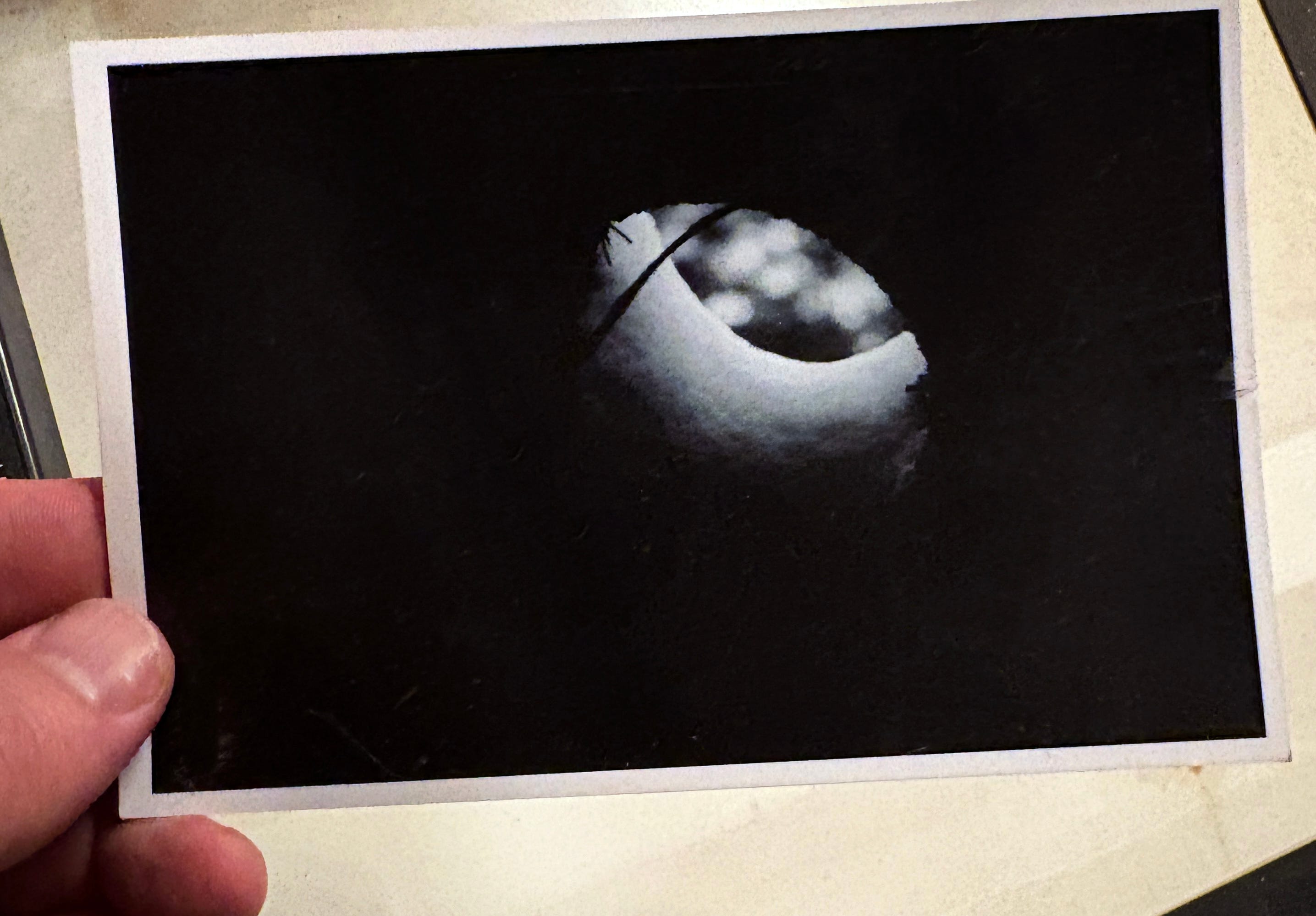
Silver particles suspended in gelatin, formed through exposure and development, producing greys and black; and, in opposition, white spaces where silver compounds have been chemically removed from the paper. That contrast between presence and absence, white and black, developing and fixing, is what constitutes the image and gives purpose to the darkroom.
I am planning to build a new darkroom in my studio at Curiosity Labs Berlin. This is not my first laboratory. As an artist and professional printer, I had one on the rooftop of my parents’ house in Mexico, and I worked and taught students in various others.
What I did not do then was explain and account for the chemical processes and ecological consequences involved in producing photographic images, extracting silver, and disposing of chemical residues. As I plan this new professional darkroom, which will be open to professionals, printing enthusiasts, and students, I feel the need to account for and respond ethically to the processes involved in creating images.
For this project, I want to keep two columns: the silver that remains in the image and the silver that leaves it. I want to follow what happens to that second column—how much can be recovered, what remains in the residues, and what I cannot yet account for.
The first photographic project I’ll print in the darkroom will consist of photographs I’ll make at sites of colonial extraction in Mexico, specifically in Guanajuato, Hidalgo, and possibly Zacatecas. I'm particularly interested in the technical processes used during the colonial period and how they connect to darkroom chemical procedures.
When light reaches unexposed photographic paper, the silver halide crystals that receive light undergo a chemical transformation. We cannot see it. But the image is already there, latent on the paper. Only during development, as the image slowly emerges, can we see the result: the exposed crystals transform into metallic silver. The parts of the image that received light get darker as more metallic silver forms, while the parts of the paper that received no light stay unchanged, at least temporarily.
The paper then goes through another chemical process in which the fixer removes the remaining undeveloped silver halides. Traditionally, the fixing agent is sodium thiosulfate, or “hypo”; many modern rapid fixers use ammonium thiosulfate. With thorough washing and proper storage, fixing lets the image survive for generations. But the unused silver remains dissolved in the fixer. The amount retained in a finished print depends on the paper and the image. What leaves the paper has not disappeared: it has moved into another solution. The darkroom becomes, potentially, a laboratory for silver recovery.
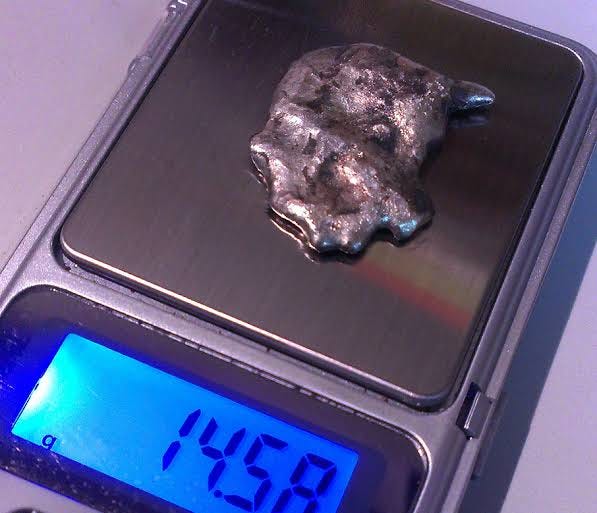
Because of its silver content, old fixer thrown down the drain can harm the environment. Professional recycling centres can recover silver from used fixer before discarding it, but you can also use chemical methods to recover unused material in the darkroom, though further refining may be needed to obtain pure metallic silver. It is a small amount, but the silver resulting from this process can be refined and cast into forms, small discs or ingots.
I’m interested in recovering the unused material as a means of material accountability: recognising photography's place within the context and history of silver extraction, and weighing and accounting for what leaves the image. Some of the silver used in Curiosity Labs Darkroom will create images; as much as possible of the rest will be recovered to produce other artworks. The losses and uncertainties will also be part of the account.
I propose the darkroom as a laboratory that recreates or rehearses, on a small scale, some processes associated with the silver production industry, including the transformation of silver compounds into metallic silver, waste management, and metal recovery. These chemical processes are connected. Through them, I want to rethink photography’s place within the deep history of the materials and extractive practices that made it possible.
The history of visual arts is tied to similar chains of material extraction, not necessarily on a small scale: pigments, metals, fabric, fat, oils, linen, and cellulose are just a few of the materials traditionally used in art practices. Today, much of photography has moved from silver to digital technologies, but its material dependencies remain. Cameras, sensors, batteries, and the infrastructure that supports them depend on mined materials, whose processing also produces waste and consumes water.
Silver photography participates in this history of extraction. The silver used in an image ultimately comes from ores, even when it reaches the photographic industry through recycling. In Mexico, that history is closely tied to colonial extraction. The decline in photographic silver demand following the growth of digital photography offers a distance from which to examine the ghosts left in its wake.
This narrative of extraction remains incomplete without considering not only the paper, but the film used in photography and cinema—a medium which shares the same scientific logic: light-sensitive silver compounds held in gelatin on a film base.
At twenty-four frames per second, cinema carried this material process through entire sequences of images, multiplied across negatives and distribution prints. Companies such as Eastman Kodak connected photographic manufacturing to international networks of silver production.
The “Silver Screen” was never a metaphor. The phrase originally referred to the reflective surface of projection screens, but silver was also present in the photographic processes that made the moving image possible. The images that captured so much of the twentieth-century history and American entertainment culture depended on a metal extracted from the earth.
This industrial history follows an older movement of silver through Mexico and across the world. Silver was not only a symbol of elite status in architecture and Baroque religious ornaments, but also a medium for producing coins—the famed Reales de a Ocho—that circulated worldwide. Mexican silver was once a widespread economic force flowing from the Americas to Imperial China and India.
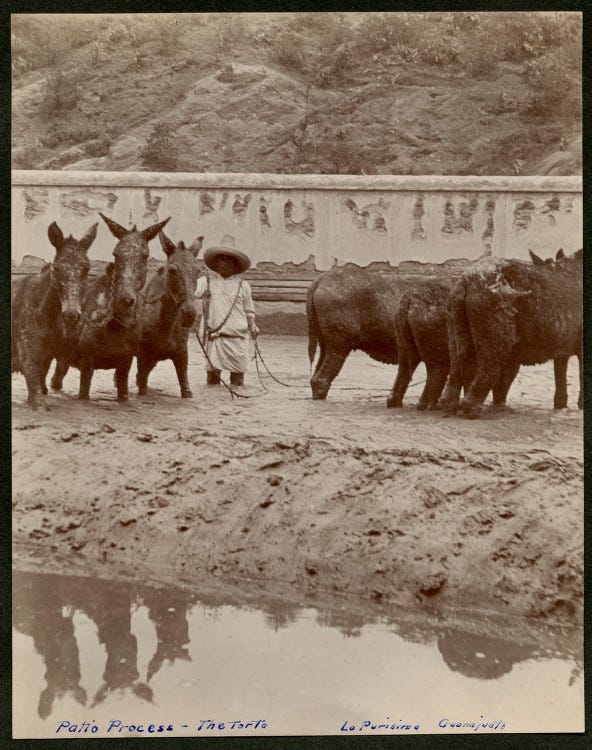
Centuries before photography, mining engineers processed silver on the stone floors of colonial Mexico using the Patio process in what were, in effect, laboratories on a landscape scale. This technique required mixing crushed ore with salt, copper compounds, and mercury across courtyards the size of public squares. These were chemical operations for separating silver from the materials around it. The darkroom later used other chemical processes to separate the silver that formed an image from the silver that did not.
The Spanish Crown was an extraordinary accountant. The Crown weighed, assayed, registered, and taxed silver production. The paperwork survives; records document production in mining regions such as Pachuca, Zacatecas, and Guanajuato. But accounting for mercury as a material used in production is different from accounting for its consequences in workers’ bodies, soils, and streams. An account is not a neutral description of events. It is a decision that edits what is accounted for, and what columns exist in the bookkeeping.
So when I say I will account for the silver in my darkroom, I do not mean only that I will be careful when weighing and storing it. I mean, I intend to account for the second column. Each print that will result from this project will carry, on its back, an estimate of the silver it holds and the silver it released. The fixer will be saved, the metal recovered and weighed, and the numbers published. I will distinguish between what I can measure across a batch and what I can only estimate for an individual print.
These measurements will not account for the full ecological consequences of extraction. The silver I recover will not measure the mercury left in a landscape, or repair the harm done to those who worked there. But I want to make these limits visible alongside the numbers.
The accountability I am after is not only the accountant’s. To be accountable is to be liable to be called to account: the word contains a second person, someone who asks. That is near what Haraway and Barad name response-ability—not a rule to obey but a capacity to build, the ability to answer. Publishing the account also means allowing others to question what I have measured, what I have left out, and what I do with the material I recover.
Recovery does not undo the history of extraction. These processes are irreversible. What I propose is to stay accountable: keep the second column, publish it, and let it be read. I am building a darkroom in Berlin. I am going to Mexico to photograph the grounds where this material came out, using the same metal whose extraction shaped them. I will count both columns.