I opened my eyes, and the image vanished immediately. It had been abstract. Reddish, but also bright — like patches of white cloud mixed with a red sun, shifting slowly, changing shape.
I looked out the train window. No clouds. I saw nothing. My glasses were slightly fogged by the FFP2 mask, which covered my cheek rather than my nose and mouth. I thought it had been a dream, but it was too brief for that — more like a fleeting image. A narrative too subtle for a dream.
I considered instead that it might have been one of those images that appear when you close your eyes firmly, seeing abstract blotches of form and colour. These images are called phosphenes and are generated internally via pure electrical stimulation: no light, just spontaneous, emergent images. Impossible to record or share.
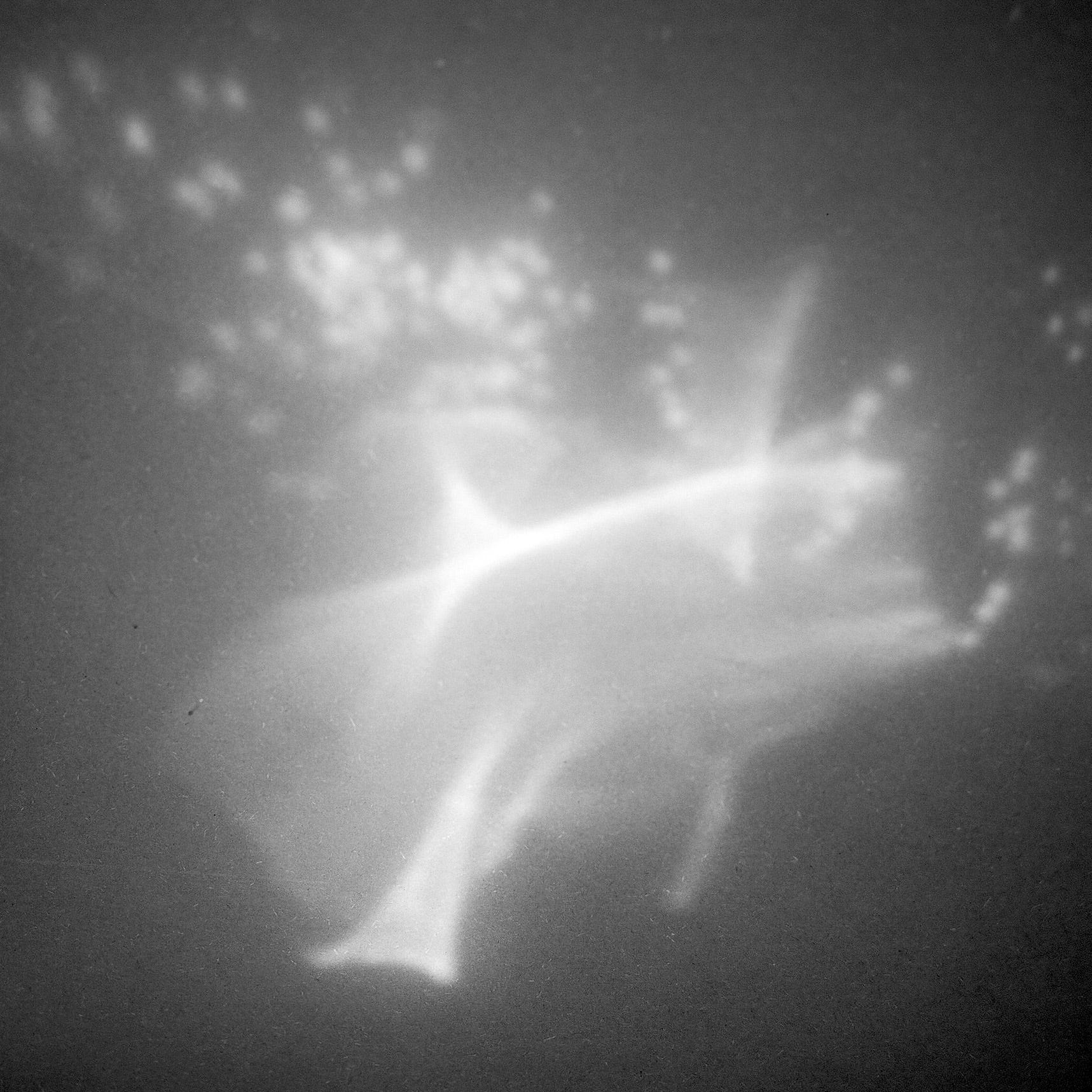
As a child, I used to close my eyes to watch the shapes that seemed trapped between the retina and the brain. I loved losing myself in the infinite fractals that emerged like abstract landscapes in constant motion. I remember them as a journey through complex networks — a passage through tunnels of light — and although they were mostly unrecognisable smears and forms, those passages had a forward momentum, a zoom-in logic, as though responding to some temporal order: an irreversible progression unfolding ahead. There was no way to know what shape would come next, but I knew there was no going back to the ones that had passed. Always zooming in, phosphenes seemed to move forward — like time, toward the future.
I suspect that if we ever experienced phosphenes in reverse, moving backwards instead of forward, we would notice immediately. Just as we would notice if a log in a bonfire, instead of burning and producing smoke, had its smoke flow back into the fire to extinguish the wood. Or if waves, instead of breaking forward, retreated from the shore, and the undertow moved ahead instead of pulling back. Or if rivers climbed toward the mountains and formed glaciers, instead of moving always downward, toward the sea, in the direction of time’s arrow. Or if objects, instead of falling, rose.
Or if we could reverse ageing — growing younger with time. We would notice that too.
As a child, I found that pressing my eyes would further animate the images. In children, the visual cortex is highly active and plastic, which is probably why the phenomena are so rich and fractal-like at that age. That vitality, too, is subject to time’s arrow. As an adult, I see fewer phosphenes. They are still there — and I find them as fascinating as before. But I find myself wondering why I stopped seeking them out, why I stopped creating those inner landscapes and noticing the passing of time.
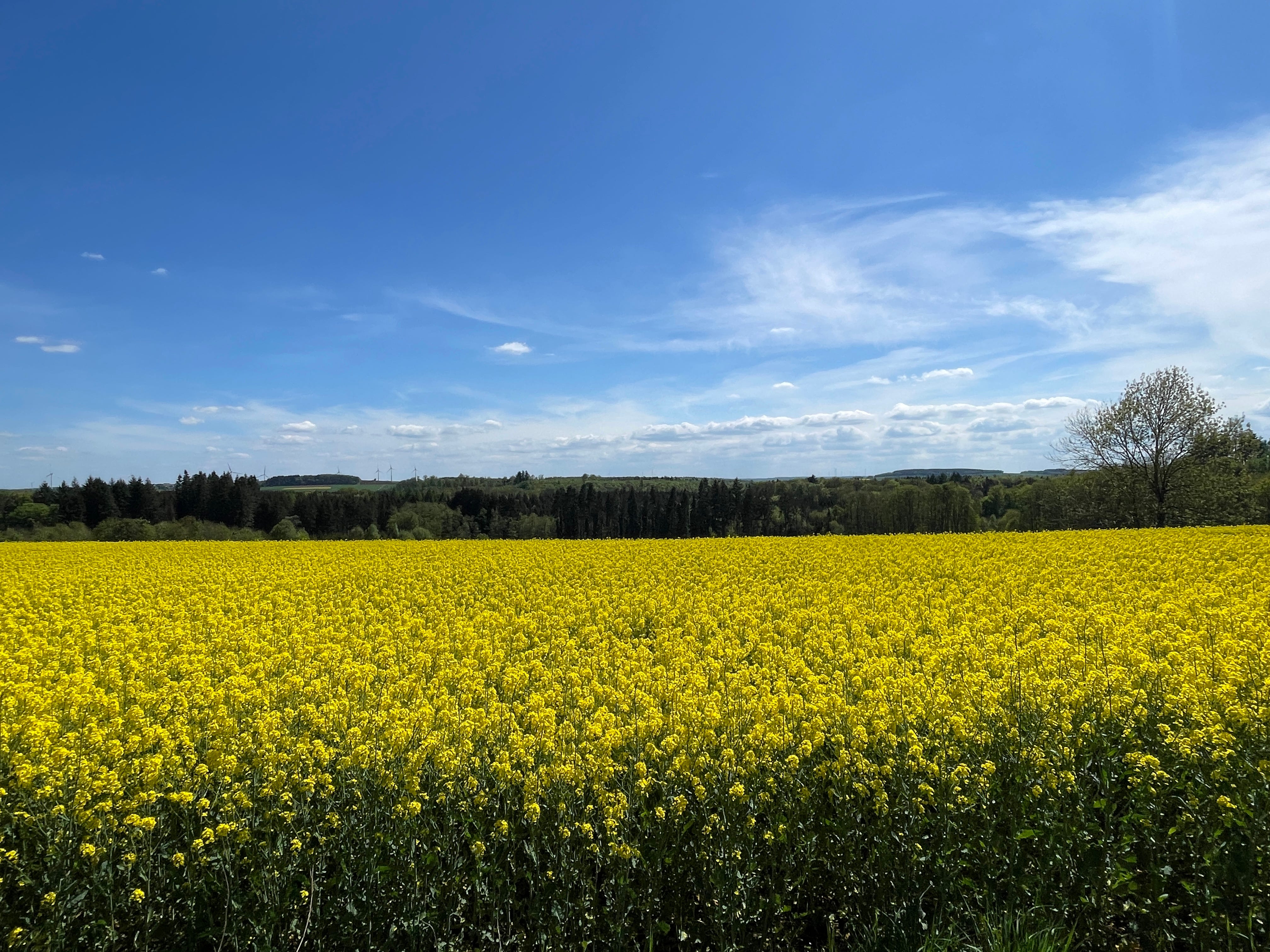
Like an arrow, the train moved forward. I looked through the window. There were still no clouds, nor a red sun in the sky. But I could see yellow fields covered in rapeseed flowers — so typical of spring in Brandenburg. Things moved rapidly, disappearing behind me. I thought about the urgency of noticing time as it manifests in the things of this world. About experiencing the subtle progression of phosphenes, the train moving forward, the rapeseed flowering only for a couple of weeks, next to the rye swaying like a pendulum in the wind — a true champion of time.